Are you looking to successfully deliver your IT projects with a nearby, skilled partner who truly understands your needs? Morocco, Egypt, Lebanon, and Tunisia are among the most popular nearshoring destinations in the Mediterranean. Each offers its own specific advantages.
In this article, we highlight Tunisia’s strengths as a strategic alternative for your IT projects.
A strategic geographic location
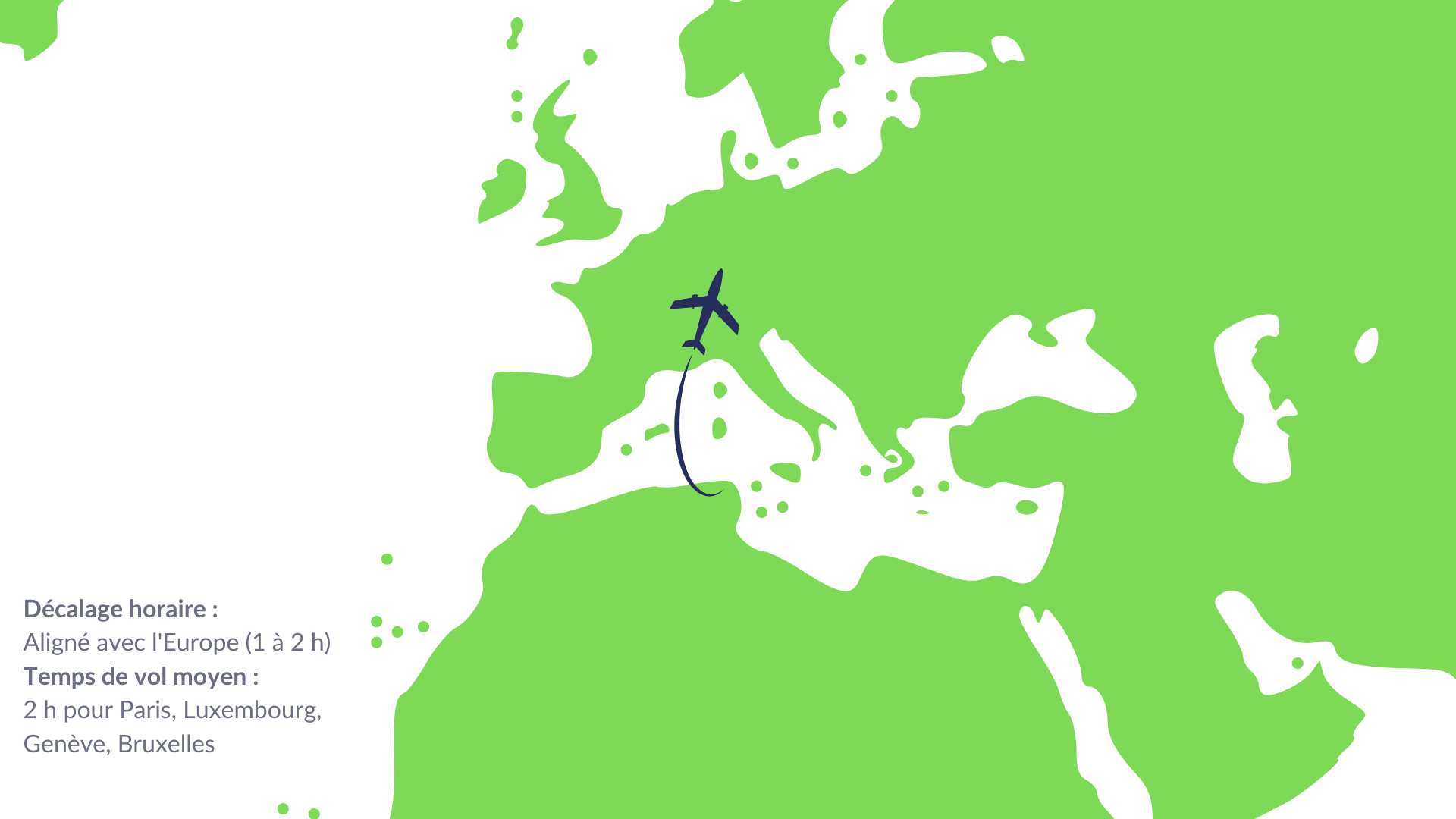
Located at the crossroads of Europe, the Middle East, and Africa, Tunisia benefits from an ideal proximity to European markets. Only a 2-hour flight from major European capitals and sharing the same time zone as Europe, Tunisia enables smooth, real-time collaboration.
A fast-growing tech ecosystem
The ICT sector contributes around 7.5% of Tunisia’s GDP, reflecting its increasing role in the national economy. Tunisia hosts more than 1,800 IT companies, including over 100 subsidiaries of multinational groups such as Vermeg, Orange, Telnet, and Ubisoft (Smart Capital, 2023). These companies have already established service centers and R&D hubs in Tunisia, taking advantage of a favorable tax environment and strong government incentives for IT investment. The country has also invested in several technology parks, including El Ghazala, Sfax, and Sousse.
A strong pool of highly skilled talent
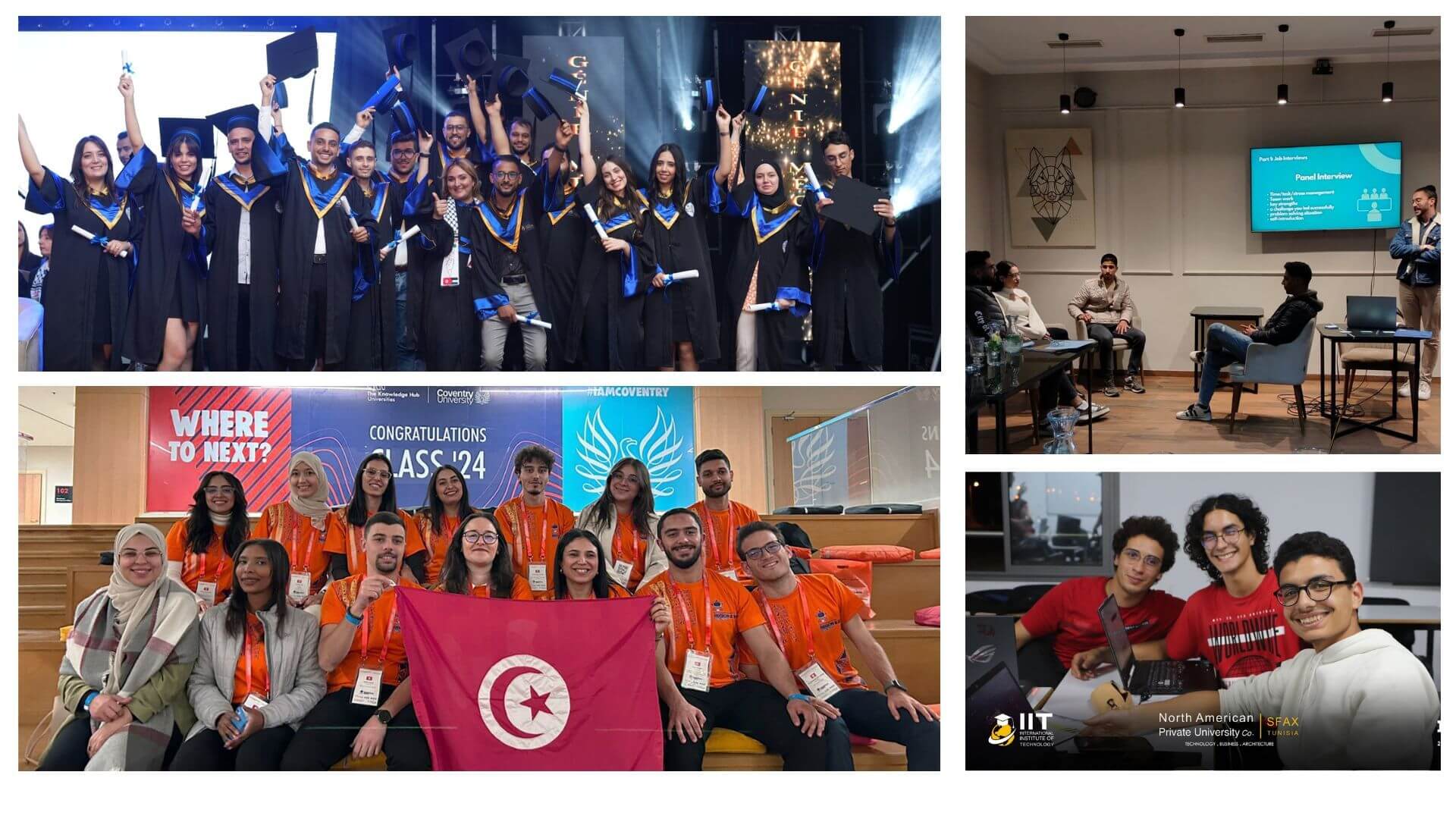
Young Tunisian engineers and developers from various engineering schools in Tunisia.
Tunisia produces around 8,000 IT engineers every year (Ministry of Higher Education, Tunisia). These graduates come from a growing network of engineering schools such as ENIS, ENIT, IIT, ESPRIT, and Sup’Com, which train highly qualified engineers prepared to meet the needs of international companies.
These institutions are well known for their ability to adapt to technological trends and for producing graduates who are highly sought after on the job market, particularly in technologies such as JavaScript, React, and PHP.
In fact, more than 85% of web and mobile development graduates find employment within six months of graduation, with 30% working directly in offshore or nearshore environments (Smart Tunisia).

A cultural and linguistic bridge
Thanks to a strong French- and English-speaking background, Tunisian engineers integrate easily into international projects. Over 70% of IT graduates are fluent in both French and English (Ministry of Higher Education, Tunisia). This language proficiency, combined with familiarity with European work standards, facilitates agile workflows and smooth communication.
A competitive offering
The average daily rate (ADR) for IT services in Tunisia remains highly competitive compared to European standards, offering companies cost-effective outsourcing without compromising quality. With a strong talent pool and close proximity to Europe, Tunisia is positioned as a strategic choice for IT outsourcing.
Conclusion
Nearshoring in Tunisia represents an ideal alternative for IT companies seeking to combine proximity, expertise, and cost efficiency. With a rapidly growing market, a strong innovation ecosystem, and a highly skilled workforce, Tunisia is establishing itself as a true Mediterranean tech hub. Seize the opportunity to optimize your IT projects through strategic outsourcing. Get in touch with us today to learn more.